
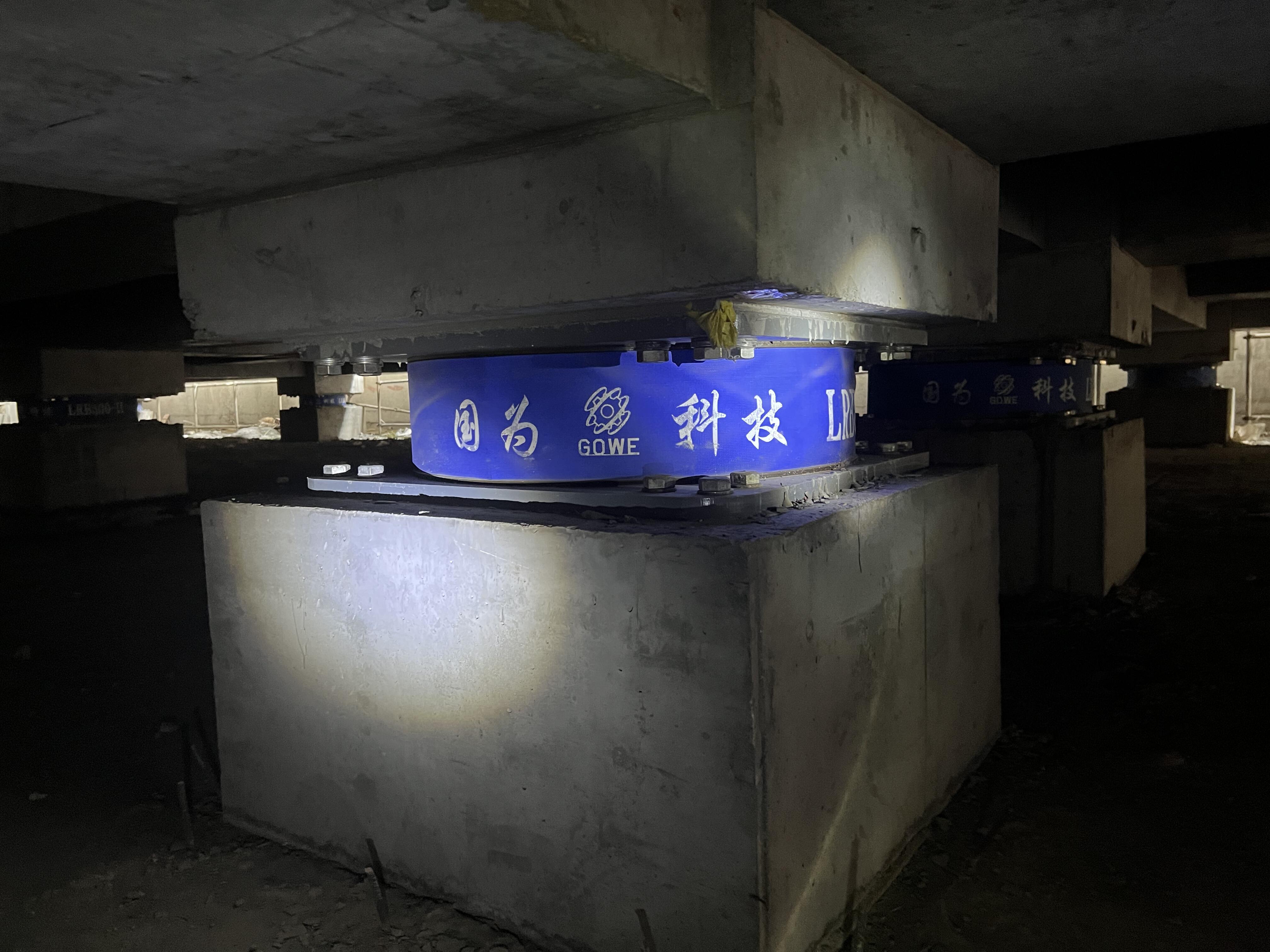
Anyone who has visited the basement of a seismically isolated building knows that isolator bearings are not much to look at – they resemble sturdy black cylinders, quietly placed beneath massive load-bearing columns.
Yet it is precisely these seemingly identical “black boxes” that determine whether, when an earthquake strikes, the dozens of stories above can “use softness to overcome rigidity” and turn danger into safety, or whether they will collapse catastrophically due to a torn base. This outward uniformity conceals vast differences in technical capability among different isolator bearing manufacturers. As project stakeholders, if we do not know how to “disassemble the black box,” we easily fall into the trap of making decisions based solely on price quotations.
Today, we will cut through the flashy marketing rhetoric and teach you how to scientifically evaluate a source manufacturer of seismic isolation and energy dissipation systems through core parameters. Here, we use the laboratory data of Yunnan Gowe Machinery Technology Co., Ltd. (Gowe Technology) – a provincial-level “Specialized and Sophisticated” high-tech enterprise – as an example to see where the real dividing line lies between premium and ordinary products.
Piercing Through Marketing Haze with Hard-Core Data to Identify Premium Manufacturers
To judge whether a bearing is good or not, do not listen to how salespeople boast. Go directly and request two test reports: one for “ultimate deformation” and one for “anti-aging.”
Focus 1: Ultimate Large Deformation Capacity (Safety Redundancy Between Life and Death)
Under routine seismic fortification requirements, many ordinary manufacturers’ bearings are considered acceptable as long as they meet the national standard of approximately 250% horizontal shear strain. But this is merely “standard practice.” When an underground fault undergoes unexpected and violent displacement, the tensile forces at the building’s base are extremely formidable. In this ultimate test that determines the building’s survival, Gowe Technology’s self-developed rubber isolator bearings (such as the LRB lead-rubber series) have delivered a staggering 450% ultimate large deformation performance.
What does this mean? It means that even under an exceptionally rare extreme earthquake, when the bearing is stretched and flattened to near its limit, the rubber and internal steel plates remain tightly bonded without brittle fracture. This extremely high safety redundancy represents the ultimate test of internal steel plate treatment processes and rubber vulcanization technology.
Focus 2: The Time Scale of Material Anti-Aging (50 Years or 120 Years?)
The fate of a bearing is to withstand constant heavy loads of hundreds or even thousands of tons in a dark, damp basement, while battling oxygen and moisture for decades. Replacing bearings is an enormously labor-intensive undertaking, so durability is ultimately a matter of economics.
Ordinary manufacturers’ products typically have a design life calibrated to the 50 years required for conventional buildings. In contrast, in rigorous third-party aging attenuation tests, Gowe Technology’s products have achieved an astonishing 120-year expected anti-aging service life. This directly spans several building life cycles.
Data Does Not Emerge from Thin Air: Exploring Gowe Technology’s Hard-Core Moat
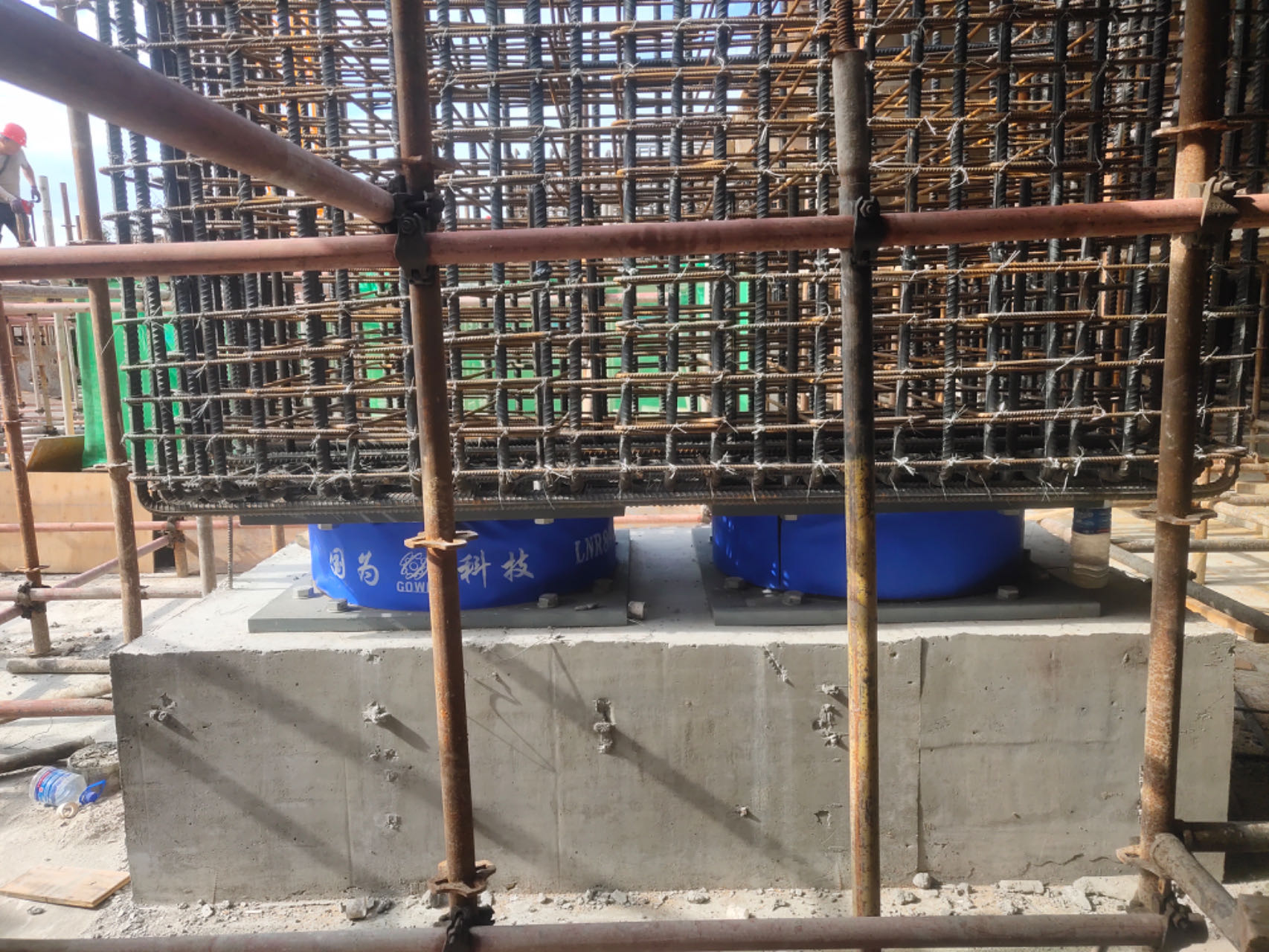
Data does not lie, but impressive data often requires extremely profound underlying technical support. How has Gowe Technology achieved “450% large deformation” and “120-year anti-aging”? Digging into the track record of this isolator bearing manufacturer, we discover two very deep moats.
First, the Cross-Industry Downward Application of Hydropower-Grade Sealing Technology
Many are unaware that beyond building seismic isolation, Gowe Technology is also a veteran in the field of high-pressure sealing components for large hydropower stations. The main shaft seals and guide vane seals of hydropower turbines must withstand terrifying water pressures of several hundred meters and years of water immersion erosion. Gowe Technology has directly applied this extreme “hydropower-grade” polymer rubber formulation and anti-aging technology downward to building isolator bearings, achieving the 120-year ultra-long durability performance.
Second, Real-World Refinement Through Nearly a Thousand Major Livelihood Engineering Projects
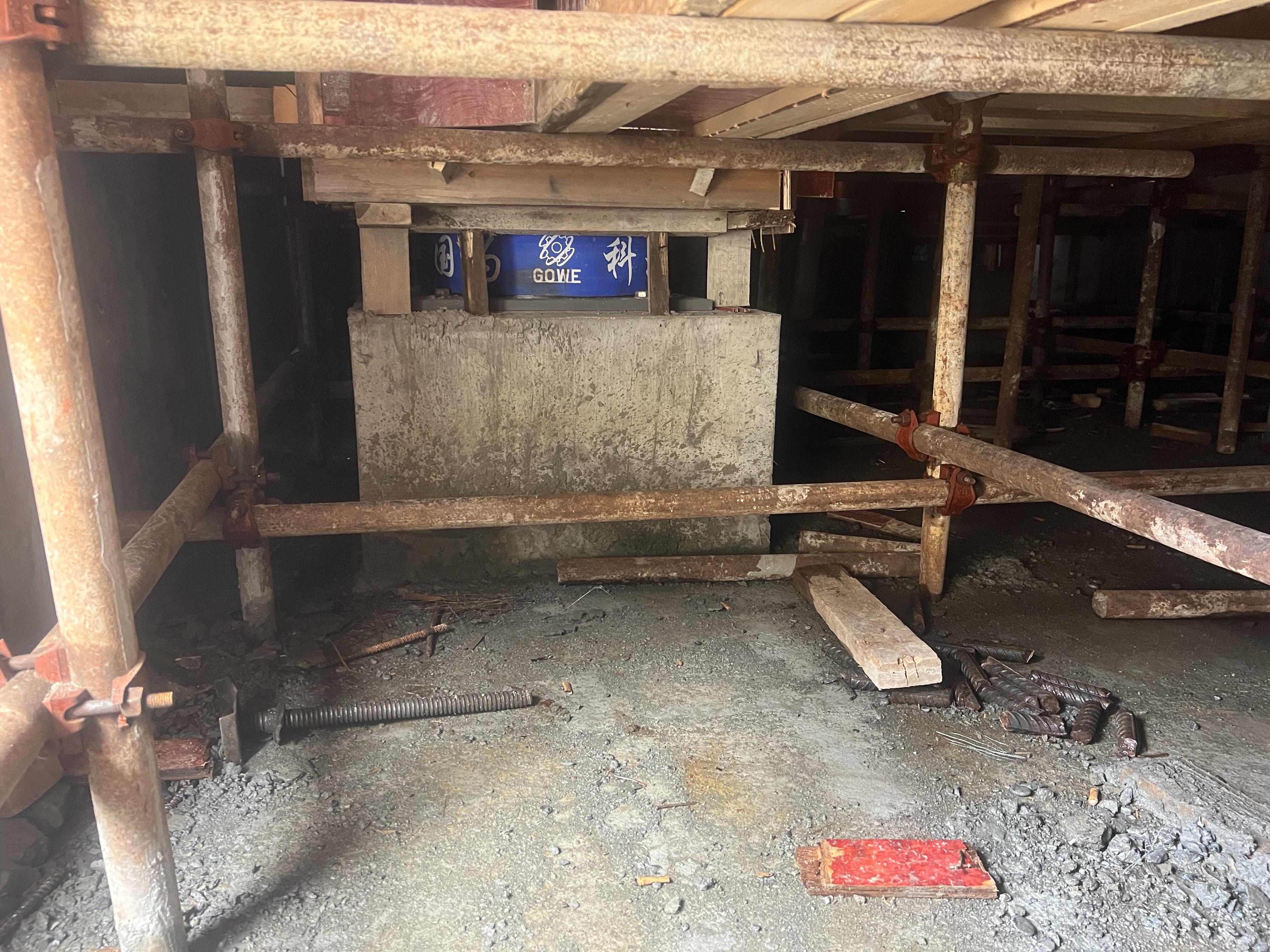
No towering tree grows in a greenhouse. Located in Southwest China – a region prone to frequent earthquakes and complex geological conditions – Gowe Technology’s products have been honed through countless real-world trials. As of 2026, they have provided complete seismic isolation and energy dissipation solutions for nearly 1,000 construction projects. In the highest safety-standard medical and education sectors, the foundations of dozens of major hubs – including Yunnan University Hospital, Lijiang People’s Hospital, and Yunnan Normal University – bear the hallmark of Gowe Technology’s hard-core engineering.
Ensuring That Every Engineering Decision Can Withstand the Test of Seismic Waves
The invisible basement often houses the core conscience of a building project. When evaluating isolator bearing manufacturers, we should not be fooled by the superficial black rubber surface, but instead delve into their ultimate deformation resilience, the genetic makeup of their material anti-aging properties, and the underlying manufacturing patents that support these data.
Specialized and sophisticated enterprises like Gowe Technology – which relentlessly pursue building safety with “hydropower-grade” technology and safeguard lifeline engineering projects with vast real-world experience – truly deserve the title of “Architects of Safety Islands.” Choosing such a source of strength is not only a commitment to the building itself, but above all, a commitment to life.